
A fairly comprehensive list of my published fiction by year and linked to the appropriate site. You may notice some of the stories have a “^” symbol beside them; this indicates that the tale is formally part of my “War Hero” universe. If you want to learn more about the War Hero universe, click on these little letters.
Fiction:
-2025-
“Checkmate” and “Steel Dragons of a Luminous Sky” audio rights sold to Clockwork, Curses and Coal and Grim, Grit and Gasoline, respectively.
“The Saga of Little Fig” – pending from CatsCast
“The Beasts at the End of the World” – Shapers of Worlds Volume 5 anthology.
Perdition’s Storm (novel) – set in the Black Tide Rising universe from Baen Books and due out in November
“Director X and the Thrilling Wonders of Outer Space” – Robots Past & Future from Flame Tree Publishing

-2024-
“The Eyes of Damocles” – The opening story in Tales of the U.S. Space Force from Baen Books
“Watchman, What of the Night?” – Winner of the SciFiDea Dyson Sphere Contest.
“Death on the Nerfertem Express” – Available over at StarShipSofa.
-2023-
“Death on the Nefertem Express” – Racing into Chinese translation for Science Fiction World.
“And Lifts Her Leafy Arms to Pray” – Sprouting in Third Flatiron’s Rhapsody of the Spheres.
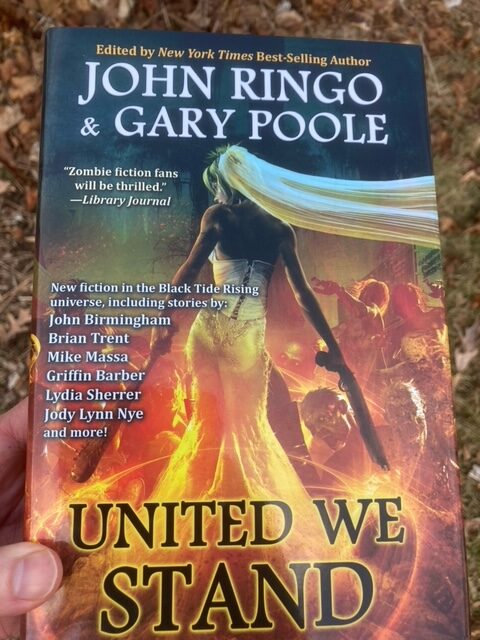
“Isle of Masks and Blood” – Shambling into the upcoming United We Stand anthology, part of the Black Tide Rising universe.
“The Dog and the Ferryman” – Crossing the Styx and into the pages of the Hidden Realms anthology from Flame Tree Publishing’s Gothic Series.
“Flawed Evolution” – Invading the upcoming Weird World War: China, and exploring a world under siege by otherworldly visitors.
“Cyrus, Defender of the Universe” – Purring its way into an upcoming edition of Chicken Soup for the Soul.
“Legacies in Light and Dark” – Published in The Dread Machine’s Darkness Blooms anthology. ^
-2022-
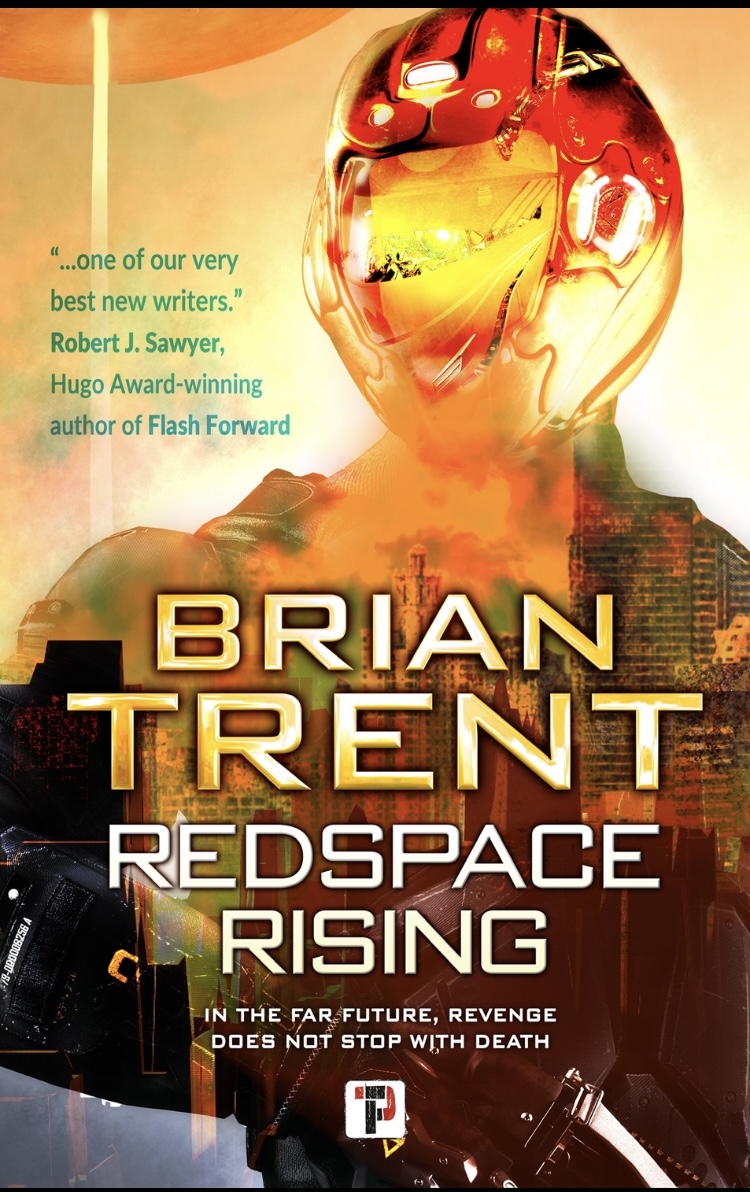
Redspace Rising, the sequel to my sci-fi novel Ten Thousand Thunders, is available everywhere books are sold. Publisher’s Weekly calls it a “nimble, bloody space opera… Trent works in some thought-provoking speculation on the pliability of identity and technology’s ability to change human nature.” ^
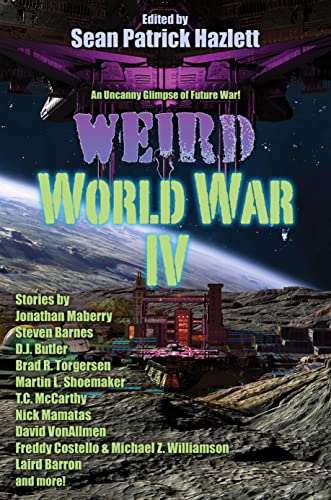
“Reflections in Lizard-Time” – “The train wasn’t built for humans, but we were still allowed to ride it, in the way that rats are ‘allowed’ to ride a seagoing vessel.” Published in Weird World War IV from Baen Books.
“An Incident on Ishtar” – “Her family tried very hard to never use the word ‘crazy’ with her. So therefore they didn’t say it was crazy that she was applying for a Venusian post as Tier 3 Balloon Specialist.” The most dangerous storm in human history has forced Venus’ floating aerostat colony to separate into its individual substations and scatter, allowing the storm to pass. As the modular pieces reassemble, a mystery presents itself: where is substation Khius? What dark secret lurks among the clouds? Floating into Escape Pod and originally published in the March/April 2018 issue of Analog. ^
“Love Song of the Wendigo” – Rampaging into Dark Cheer: Cryptids Emerging.
“The Song of Lost Voices” – Piping into The Magazine of Fantasy & Science Fiction.
“Howlers in the Void” – Capering into Worlds Long Lost from Baen Books.
-2021-
“The Last Library” – “It was best to work at night — they could see in the dark, after”. A special project to rescue knowledge from history’s greatest book burnings ranges across the millennia. Published in Nature.
“Across From Her Dead Father in an Airport Bar” – “He lowers his drink and grins, the foamy white moustache providing a brief glimpse into what he might look like if alive today, part Santa Claus, part Mark Twain.” Published in Flash Fiction Online. ^
“Checkmate” – “A civilized age requires civilized warfare.” This steampunk tale is set in an alternate Victorian Age which uses chess as a model for resolving international conflicts, and appears in Rhonda Parrish’s Clockwork, Curses and Coal.
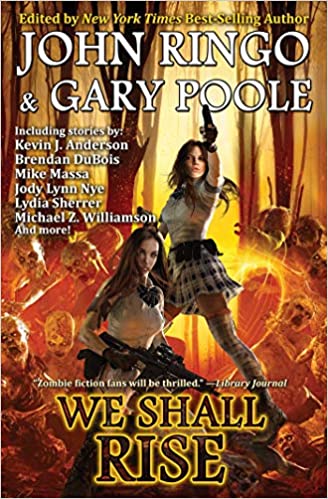
“Descent into the Underworld” – Exploring the aftermath of the zombie apocalypse in We Shall Rise, the latest anthology installment of John Ringo’s New York Times-bestselling Black Tide Rising series.
“The Scorpion and the Syrinx” – Investigating a supernatural mystery in my brand new Nova Roma franchise, and the featured story in the September/October 2021 issue of The Magazine of Fantasy & Science Fiction.
“Shadow Walk in Obsidian” – What would you for the person you love? Published in the July 2021 issue of Galaxy’s Edge.

-2020-
“Theft, Sex and Space Pirates” – Recurring fan favorite Jolene Fort gets involved in a curious mystery of Grand Theft Shuttle. Departing the airlock soon at Third Flatiron. ^
“The Dog and the Ferryman” – “It took him a moment to realize he had been sleeping for several years. Perhaps longer than that.” Combining Greek mythology, fantasy, and sci-fi, this tale rows its skiff through the pages of the September/October 2020 issue of The Magazine of Fantasy & Science Fiction. It’s also shaping up to be one of my most popular tales.
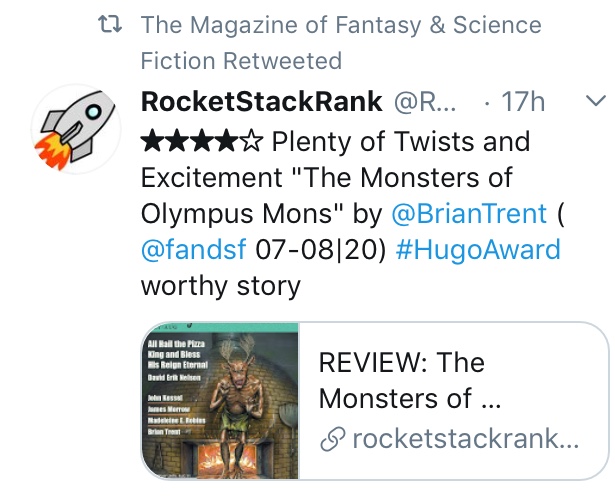
“The Monsters of Olympus Mons” – What does war, propaganda, artificial intelligence, and cryptozoology have in common? Come visit this slice of Martian life, and one of my favorite stories I’ve written. Hiking into the pages of the July/August issue of The Magazine of Fantasy & Science Fiction. ^
“Death on the Nefertem Express” – A luxury train on a deadly world has just been sabotaged. In thirty minutes, the sunrise will kill everyone aboard. Can notorious ex-space pirate Jolene Fort solve the mystery, and save the passengers, in time? All aboard in the March/April 2020 issue of The Magazine of Fantasy & Science Fiction. ^
“The Dark Lord of Silk” – In Victorian London, a ghastly secret lurks behind the veil of the soot-hued night. Scampering soon through narrow back-alleys on Shock Totem.
“Crash-Site” – To be republished in the excellent Czech magazine XB-1. ^
“A Thousand Deaths Through Flesh and Stone” – To be republished in XB-1. ^
“The Sightflower” – An X-Files-flavored tale of conspiracy and alien encounter. Landing in the pages of Pole to Pole Publishing’s Not Far from Roswell anthology.
“Shadow Rook Red” – An alternate history involving the ’80s Cold War turning very hot. Going to war in the Weird World War III anthology from Baen Books.
“Breaking News Involving Space Pirates” – Who robbed Bradley Winterfig’s orbital vault? How did they pull off such a heist? Is notorious space pirate Jolene Fort really to blame? Raiding the pages of the Cosmic Corsairs anthology from Baen Books. ^

-2019-
“Tunnels” – An immortal man from the 15th century Venetian Republic experiences the heartbreak and hope of the passing centuries in which the world changes, but he remains unchanging… a genetic outlier among his own species. The opening story in Third Flatiron’s Infinite Lives: Short Tales of Longevity.
“Steel Dragons of a Luminous Sky” – China, circa 1930s, in an alternate age of diesel-guzzling robots and sinister conspiracies. Featured in the Grimm, Grit and Gasoline dieselpunk anthology edited by Rhonda Parrish.
“The Anzu Protocol” – What does the Great Silence, Babylonia, extrasolar colonization, and Middle Eastern archaeology have in common? The answer awaits in the opening story of the Holy C.O.W Anthology Volume One: SF Stories from the Center of the World anthology, edited by D. Avraham.
“By the Moon Unblessed” – “It was Thursday. The giant millipede uncoiled from the depths of Mount Thegtheg and scuttled into the castle courtyard on Thursdays.” Published in On the Premises, and selected as the First Place Winner of their 33rd short story contest. ^
“Dayshift” – Clocking in on the March issue of Orson Scott Card’s Intergalactic Medicine Show, this is a hard look at selfie culture, class warfare, and the banality of evil. ^
“Old Spirits” – “What exactly does a paleoparapsychologist do?” A grocery store finds itself haunted by a most unique poltergeist. Published in the RELEASE THE VIRGINS anthology.
“Aftershock” – Asteroids, dinosaurs, and time travel in a twisted little teacup. Published in the March/April issue of Galaxy’s Edge.
“Cry the Thousand Sentinels” – “The man who needs to die pulls into the truck-stop in a cherry-red tractor-trailer while the Arizona diner clock reads 7:02 p.m…” Published in Third Flatiron’s Hidden Histories anthology.

“Crash Site” – “She neurocast from orbit into the body of a standby proxy–an out-of-work woman named Rada Rudneva who, judging by the gnawing hunger in her stomach, needed the money something awful.” On the planet Osiris, several rivals groups are swept up in the search for a mysterious vessel that allegedly crashed centuries earlier. Republished in The Year’s Best Military and Adventure SF Volume 5, and recipient of the 2019 Readers’ Choice Award. ^
-2018-
Ten Thousand Thunders – “Having just been killed in a mysterious shuttle explosion, Gethin Bryce is back to uncover what happened.” This is the origin story of my “War Hero” universe, and has hit bookstores to rave reviews this year. ^

“Extinction Studies” – “In a fight between the two deadliest creatures on the planet, who would win?” Welcome to a tidally-locked world with a unique ecosystem and two groups of hunters making a playful bet. Published in September’s issue of Terraform.
“The Memorybox Vultures” – “The problem, people told her, was that she was always dealing with the dead.” Published in the September/October 2018 issue of The Magazine of Fantasy & Science Fiction. ^

“Alien TV Shows are Bad for Your Eyes” – “So, about that third eye growing out of your forehead…” Published in Third Flatiron’s Monstrosities anthology.
“Sparg” – “Sparg had difficulty making pancakes, but he was trying.” Perhaps my most popular short story, reprinted here (and read aloud by Escape Artists maestro Alisdair Stuart himself). Recorded on Episode 614 of Escape Pod. ^
“The Doom that Came to Providence” – The world we know has ended. H. P. Lovecraft wasn’t inventing his Mythos, but telepathically receiving prophecy about the inevitable return of Elder Things. Human civilization lies in ruins. Can pairing up with an ambitious mobster salvage anything now that the stars are right? Published in THE CACKLE OF CTHULHU by Baen Books.
“Crash Site” – “She neurocast from orbit into the body of a standby proxy–an out-of-work woman named Rada Rudneva who, judging by the gnawing hunger in her stomach, needed the money something awful.” On the planet Osiris, several groups are swept up in the search for a vessel that allegedly crashed on the world centuries earlier. Published in the May/June 2018 issue of The Magazine of Fantasy & Science Fiction. ^
“A Thousand Deaths Through Flesh and Stone” – “Sometimes I ran into myself, and that was awkward.” Republished in The Year’s Best Military and Adventure SF, Volume 4 from Baen Books. ^

“An Incident on Ishtar” – “Her family tried very hard to never use the word ‘crazy’ with her. So therefore they didn’t say it was crazy that she was applying for a Venusian post as Tier 3 Balloon Specialist.” The most dangerous storm in human history has forced Venus’ floating aerostat colony to separate into its individual substations and scatter, allowing the storm to pass. As the modular pieces reassemble, a mystery presents itself: where is substation Khius? What dark secret lurks among the clouds? Published in the March/April 2018 issue of Analog. ^
“Jackbox” – “The dead body springs up from the sand, blindly jerks its service pistol at me, and squeezes the trigger.” Published in the May/June 2018 issue of Galaxy’s Edge.
“Vicious Cycle of Life” pending growth in the Clash of the Titles anthology.
-2017-
“Crater Meet” – On a November night in 1914, two groups of soldiers crawl across No Man’s Land for a meeting of the very secret kind. Published in Flash Fiction Online.
“Project Sargasso Findings on Global Nightmare Epidemic” – Can memories be passed along with our genes? From a turtle’s instinct to head to the ocean to a bee’s innate knowledge of their specialized role in a hive to… other things. The dark revelations of Project Sargasso are featured in this story published in Third Flatiron’s STRANGE BEASTIES anthology.
“Enchantment Lost” – “I need you to find my childhood. I know where it is. I’m hiring you to recover it, and bring it back to me.” This sci-fi tale is the opening act in the beautiful anthology Dark Luminous Wings from Pole to Pole Publishing. ^
“Director X and the Thrilling Wonders of Outer Space” – An unabashed love letter to the science fiction films and books of yesteryear. Since the War of ’62, humanity has lived in underground cities, with robots doing all the work and making all the movies. One of the robots, Director X, feels that creative filmmaking has gone stale, and wishes to involve human beings in the process again. Published in the delightful anthology, All Hail Our Robot Conquerors.
“Shadows and Shore Leave” – “It’s challenging seeing Mom in only three dimensions again.” A soldier in the far future returns home to visit the family he hasn’t seen in three years. His sister has fallen in with a questionable crowd. To say would spoil it. Published in the April/May 2017 issue of Orson Scott Card’s Intergalactic Medicine Show. ^
“A World of Bones” – In 1935 during the Japanese invasion of Shanghai, college student Angela Chen has died, and finds herself in a particularly gruesome and terrifying afterlife that promises to be a waystation to something better. But are the other ghosts telling the truth, or is there a more hideous reality lumbering about the netherworld shadows? Published in Episode 537 of Pseudopod.
“A Thousand Deaths Through Flesh and Stone” – “Sometimes I run into myself, and that’s awkward.” A fast-paced tale of warfare, deception, and ghastly strategy in the far future, and a pivotal story in my “War Hero” universe. Published in the May/June 2017 issue of The Magazine of Fantasy & Science Fiction. ^

“The JPEG of Dorian Gray” – an ironic sequel that explores the true concern with immortality. Published in Third Flatiron’s Principia Ponderosa, as well as in Third Flatiron’s Best of 2017 issue, and also available in podcast.
“Galleon” – “When he’s alone, lying bare-chested on the bed with the tousled sheets wrapped around his waist like a frozen image of ocean surf, I ask him: ‘Why do you prefer her on top?'” An exploration of artificial intelligence against a backdrop of galactic events. Published in the July/August 2017 issue of Analog and nominated for the AnLab Reader’s Award 2017. ^
“The God and the Gate: Book Two of the RAHOTEP saga” – A sinister conspiracy continues to hunt down the last supernatural beings on Earth. An absolutely implacable enemy from the dawn of time is emerging, and humanity’s fate may well hang in the balance. Available on Kindle.

-2016-
“Breaking News Involving Space Pirates” – Who robbed Bradley Winterfig’s orbital vault? How did they pull off such a heist? Is notorious space pirate Jolene Fort really to blame? Published in the November/December 2016 issue of Galaxy’s Edge. ^
“Interdimensional Trade Benefits” – Eris Station has vanished a mysterious flash of emerald light. A scientist is tasked with explaining her findings, but the results may not be to her employers’ benefit. Published in Nature Futures and podcasted as their favorite story of August.
“Medusa’s Revenge” – A fiendish flash piece. Published in Daily Science Fiction.
“Last of the Sharkspeakers” – Tacan has spent his life trying to provide for his people, raiding the voidsharks for food, medicine, and water. When he’s captured by the mysterious Tower People, he becomes embroiled in a larger conflict that will call into question what it means to be human. Published in the May/June 2016 issue of The Magazine of Fantasy & Science Fiction. ^
“Blood and Silver Beneath the Many Moons” – Inspector Caridwen is on the trail of a sadistic murderer who kills victims beneath the full moons. She has tracked her quarry to a mysterious town on the outskirts of civilization. Is she about to crack the case… or discover a horrifying secret that will change her life forever? Publishing in Flame Tree Publishing’s Crime & Mystery volume of their popular Gothic series.
“Vortaal Hunt” – The last time a hunting expedition went after the fabled Vortaal, none returned. Years later, a second group is embarking to slay the monster. But what was the meaning of the last expedition’s final message: “It can’t be killed”? Publishing in Flame Tree Publishing’s Swords & Steam volume of their popular Gothic series.
“Omnipunks” – My genre-bending story is the opening act of Chappy Fiction’s tremendous anthology. This story is a Tarantino-like mashup of historical eras and subgenres blended into one chronology-twisting narrative. Come meet the assorted “punks” as they’re brought together to face a common enemy from beyond time itself. Published in Chappy Fiction’s Time Travel Tales.
“RAHOTEP” (Book One) – Rahotep is one of the last ones, a reptilian shapeshifter born in the Year of the Dragon thousands of years ago. On a rainy night in modern-day Seattle, he encounters a beautiful woman who is the spitting image of his greatest love, his long-dead wife from ancient Sumer. Centuries of battle have humbled Rahotep into living in a remote mountaintop cabin away from everyone. Now, this strange woman invites him out into a world that has changed… and into a horrific conspiracy that is hunting down the very last supernatural beings on Earth. As Rahotep struggles to understand what part she plays in this—and why she so startlingly resembles his beloved Nelia—he begins gathering what remains of his old allies to uncover the truth. A new enemy has arisen, but they never dealt with a creature like Rahotep. And they will soon learn the terror that lurks behind the warning scrawled on ancient maps: HERE THERE BE DRAGONS.

-2015-
“Hic Sunt Monstra” – A colony struggling to survive on a world with a most unusual winter. How long must our mistakes haunt us? Published in the September/October 2015 issue of Galaxy’s Edge. ^
“Chasing Comets” – Study of a father and son. Of the past and future. Of hope, and dreams lost. Published in Crossed Genres.
“Karma Among the Cloud Kings” – Welcome to the planet Tempest, gas station of Shakespeare System. Meet the Jains who labor in the clouds, keeping the spires clean of debris. But where did the debris come from? Published in the March/April 2015 issue of Analog. ^
“Love Among Dead and Crawling Things” – The night is dark in New Orleans. The future of social media is even darker. Published in AE – The Canadian Science Fiction Review.
“The Archive Personality Protocol” – Three hundred years after launch, what has become of the mighty seedship fleet carrying humanity’s grand diaspora? Cynthia, what did you do? Published in Nature Futures.
“Steel Dragons of a Luminous Sky” – China, circa 1930s, in an alternate age of diesel-guzzling robots and sinister conspiracies. Published in The Mammoth Book of Dieselpunk.

-2014-
“Wedding Day” – A grim little flash piece. Which side of the aisle do you want to be on? Published in Daily Science Fiction.
“I, Arachnobot” – Published in the September 2014 issue of Galaxy’s Edge, and again in The Best of Galaxy’s Edge anthology. From TangentOnline: “A delightful tribute to Asimov.”
“Through the Eons Darkly” – “Beatriz de Legarda snapped out of the man’s head and into the smell of hot Arabica coffee and the sensation of a cold, wet towel beneath her thighs.” Published in the January 2014 issue of Galaxy’s Edge and featured on TangentOnline’s recommended reading list for that year.
“The Scholar and the Books of Thoth” – The ambitious sorcerer Djet has done the unthinkable, sending a shard of his spirit into the Egyptian afterlife to steal the coveted books of Thoth. The afterlife, however, doesn’t let go of things so easily. Published in Penumbra.
“Distant Gates of Eden Gleam” – James Porlock answers a Help Wanted ad and suddenly finds himself working as a clerk for the nefarious secret cabal which runs the world. Published in Crossed Genres. Republished in Alex Shvartsman’s FUNNY SCIENCE FICTION anthology.
“Shortcuts” – “She stepped from a crowded Riyadh street to a high altitude Nepalese village and then into a Montreal rainstorm. Three countries, three continents, and her 15-minute coffee break was almost over, and she still hadn’t found what she needed.” Published in COSMOS and republished in Flame Tree Publishing’s Science Fiction Short Stories anthology of their Gothic series.
“The Nightmare Lights of Mars” – Published and recorded on Episode 415 of Escape Pod. Host Alasdair Stuart says: “I adored how closely this sits with the truly great Mars stories. The end result is chilling and beautiful and honestly, one of my favorite stories of the year.”
“Checkmate” – Published and recorded on Episode 466 of Escape Pod. Locus reviewer Lois Tilton writes: “Here, in spades, is all the steampunk they might crave: ladies with deadly parasols, rocket packs, robotic war machines, and the mannered imperial society behind it all. A well-executed specimen of the species, an alternate version of the ways technology affects warfare and the individuals who engage in it.”
“People of the Shell” – A nightmarish alternate history set during the reign of Cyrus the Great. Welcome to the days following the Hammerstrike, when cannibalism and starvation are the least of the horrors trundling about. Published and recorded on Episode 478 of Escape Pod.
-2013-
“War Hero” – Winner in the Writers of the Future Contest for 2013 and published in Volume 29 of that series. Some evils are so monstrous, the world needs a hero. Fortunately, we can bring him back from the dead when needed. Runelords author Dave Farland kindly praised the tale: “In War Hero, there are twists after twists after twists. My jaw was dropping every third page.” ^
“Sparg” – A reader favorite, appearing on several recommended reading lists. Come meet little Sparg as he’s trying to make pancakes. Published in Daily Science Fiction. ^
“A Matter of Shapespace” – Published in Apex and winner of their 2013 Reader’s Choice Award. You come home to find a pyramid in your house. Does that really have to lead to the end of the world? Also published in The Best of Apex Anthology.
-2012-
“The Titans of Camp Four” – A lunar colony, an unwilling spy, and a secret unlike anything you expect. Published in COSMOS.
“The Empire Never Ended“ – What if the Roman Empire never fell? What if it kept growing and expanding and, eventually, linked with Chinese civilization? This story postulates such a theoretical time-line. The good? Scientific and cultural evolutions resulting from this cross-pollination have resulted in a mighty empire. The bad? An absolutely implacable enemy has arisen in consequence. Published in Electric Velocipede.
“The Theseus Woman” – a tale of obsession and irony. A man who drove his wife to suicide is now laboring at reconstructing her. This is a wicked twist on the story of Pygmalion, and was published in both OG’s Speculative Fiction and Orion’s Child. ^
“Down Memory Line” – Published in Dark Valentine. Nominated for the Pushcart Prize.
Lady Philosopher: The Story of Hypatia – based on the true story of a brilliant female philosopher murdered on the eve of the Dark Ages, in the multicultural city of Alexandria, Egypt. Hypatia was brilliant, bold, and beautiful, a teacher at the Great Library and a warrior against the rising tide of religious fanaticism. Available on Kindle here.
Nonfiction:
Technology and Tomorrow: A Challenge to Liberty – published in The Humanist.
America’s Addiction to Belief – cover piece for the July/August 2010 issue of Humanist. Also republished in Utne Reader’s Jan/Feb 2011 issue.
The Future of Immortality – cover story published in The Humanist.
Eternal Lives on Hard-Drives – Published in Clarkesworld.
Video Game Sci-Fi Comes of Age – published in Clarkesworld.
Lost Chance: Greek and Chinese Philosophy’s Unrealized Romance – published in Strange Horizons.
Was There Ever a Dinosaur Civilization? – Published in Strange Horizons.
A Greatness Reborn – published in The Humanist
The above picture(“Computer) is really cool, the same goes for the term “Gladiator”.
Busy people like you, ok, just smile if you know there is someone concerning you.
In the name of in pursuit of truths.